
Find Your Solution: Dentium Prosthetic Guide
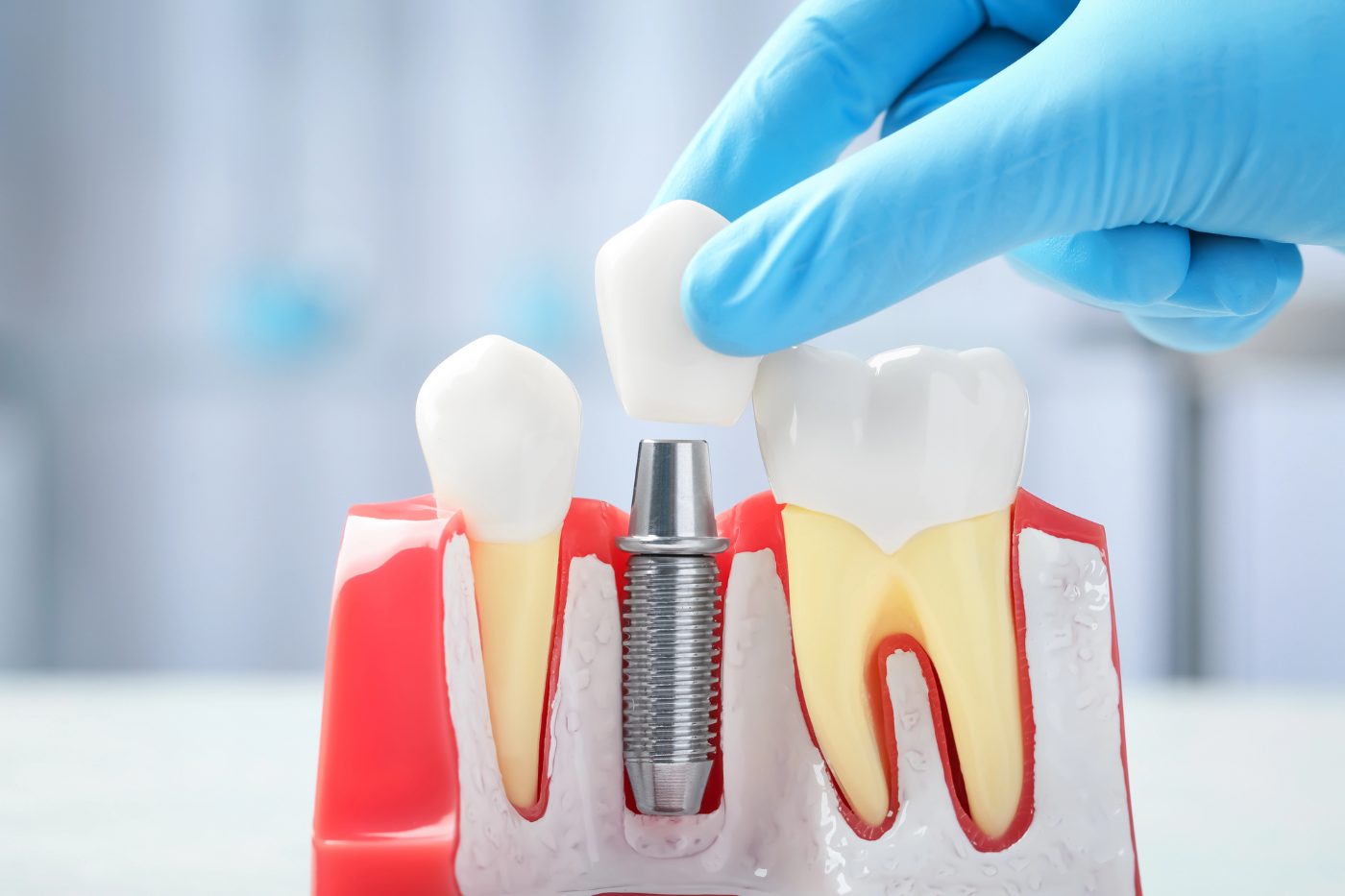 SuperLine II · SuperLine · Implantium
Find your prosthetic solution
Choose the restoration you are planning and we’ll show you the Dentium abutments that fit, from castable and temporary abutments to multi-unit cylinders and overdenture attachments.
- One connection for every diameter
- 17 restorative options
- UK stock & support
One connection, every abutment
Dentium’s single uniform connection throughout SuperLine, SuperLine II, and Implantium implant systems allow clinicians to confidently use any abutment regardless of implant diameter.
Not sure which option suits your case? Talk to our clinical team or call 020 3002 6651.
Step 1: What are you restoring?
Single Crown / Small Bridge
Screw-Retained Prosthesis
For restoring single unit crowns or small (2, 3, or 4 unit) FDPs directly to the implant/fixture level. For a one-piece prosthesis (crown or FDP). The crown or FDP is fabricated as one unit either with a casted metal substructure with layered ceramic, or resin/acrylic layered onto the temporary abutment.
Read more
The metal substructure and layered material cannot be separated. The entire prosthesis (crown or FDP) is secured to the implant via a single prosthetic screw.
 Screw-Retained
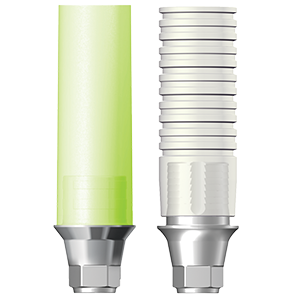
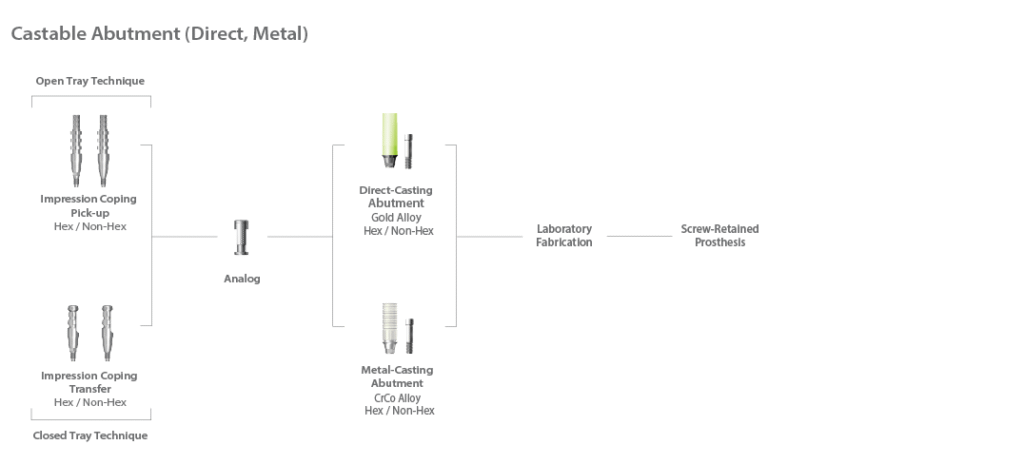
Castable Abutment (direct, metal)
These ENGAGING or NON-ENGAGING components have one diameter (Ø 4.5 mm) and one gingival height (1.0 mm) available. These abutments are ideal for traditional porcelain-fused-to-metal castings with high noble metal for implant-supported
Read more
crowns or FDPs.Lab technicians may find the following casting information helpful during laboratory casting with gold cylinders.Melting temperature of the gold cylinder:• 2552° – 2714° Fahrenheit• 1400° – 1490° CelsiusThe gold cylinders are made of a 60% gold alloy. It is recommended to use a similar high gold content alloy when casting. A 52% Au alloy works sufficiently well in this case. Non-precious alloys (base metals) should not be used with gold cylinders.To avoid porcelain cracking, a minimum of 0.5mm of casting alloy should surround the gold cylinder keeping the porcelain off or away from the abutment alloy and extend 0.5 mm past the margin of the casting alloy.
Technical detail
 Screw-Retained
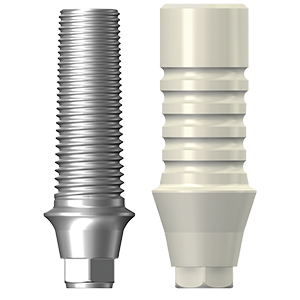
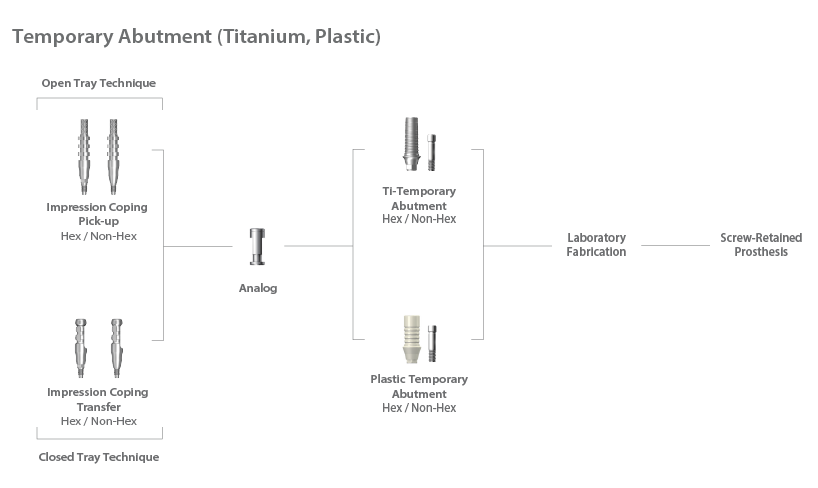
Temporary Abutment (titanium, plastic)
These ENGAGING or NON-ENGAGING components have a variety of diameters (Ø 4.5 mm, 5.5 mm, 6.5 mm) and gingival heights (1.0 mm, 2.0 mm, 3.0 mm).
Read more
The 10 mm abutment height allows ample room for the technician to adjust the height of the abutment based on the clinical situation. These components are ideal for traditional interim acrylic or resin implant-supported crowns or FDPs.
Technical detail
Cement-Retained Prosthesis
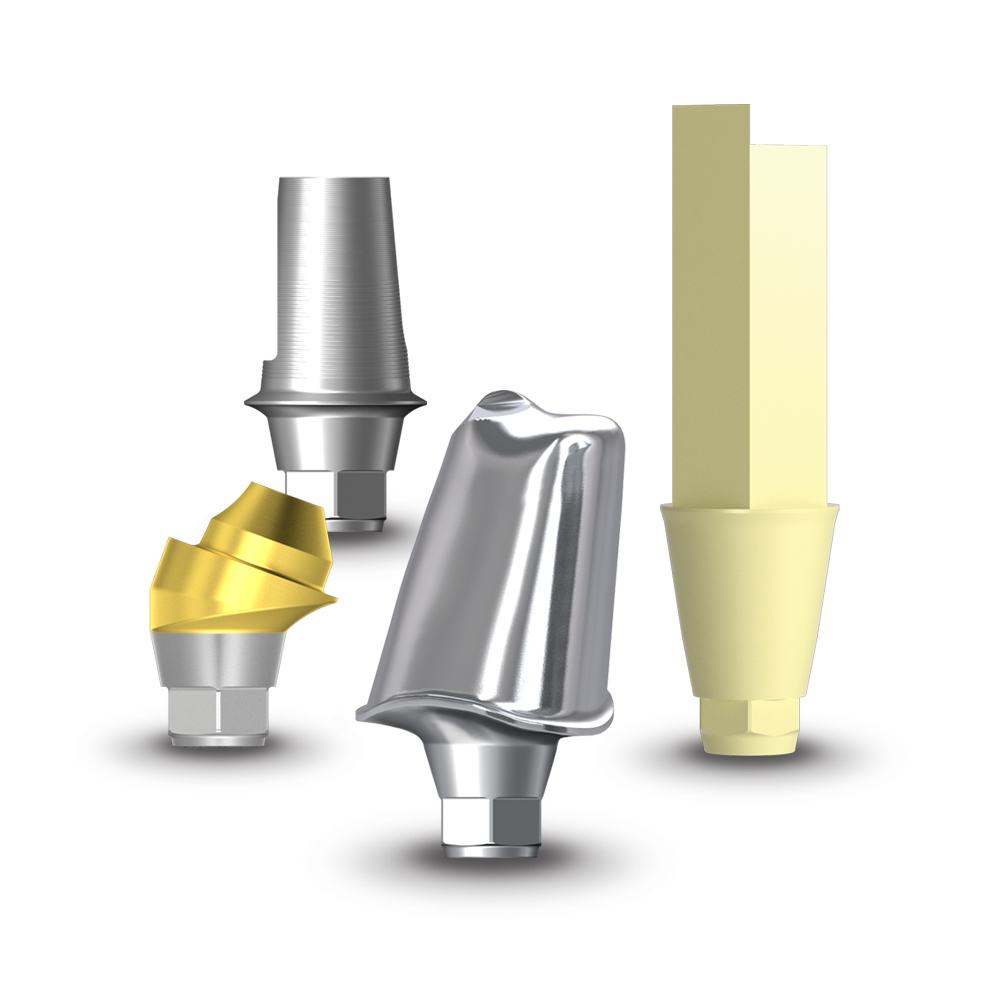
For restoring single unit crowns or small (2, 3, or 4 unit) FDPs directly to the implant/fixture level. For a two-piece prosthesis (crown or FDP). A generic stock abutment is secured to the implant via a single prosthetic screw and the prosthesis (tooth portion) is secured and retained onto the abutment via a cement layer.
Read more
Note that cementation of the crown or FDP is usually performed intra-orally (in the patient’s mouth). However, if a screw-hole is designed into the tooth portion, cementation can be performed intra-orally and then the entire prosthesis can be removed for ideal cement clean-up and polishing. Cementation could also be performed extra-orally (on the dental model) and delivered into the mouth.
 Cement-Retained
Dual Abutment
This ENGAGING or NON-ENGAGING component has a variety of diameters (Ø 4.5 mm, 5.5 mm, 6.5 mm), gingival heights (1.5 mm, 2.5 mm, 3.5 mm, 4.5 mm, 5.5 mm), and abutment heights (short 4.0 mm, tall 5.5 mm). This abutment is ideal for cemented CAD-CAM all-ceramic implant-supported crowns or FDPs.
Technical detail
 Cement-Retained
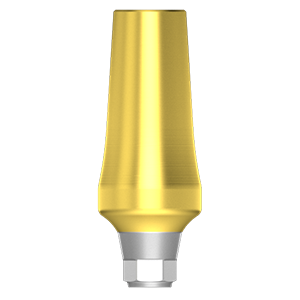
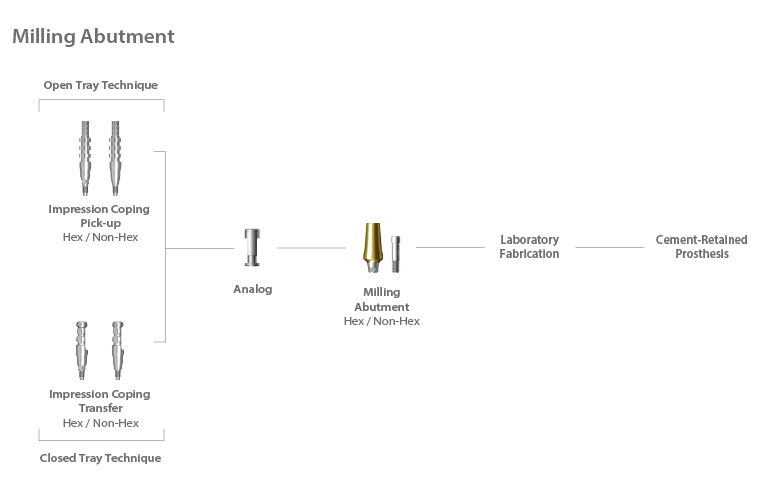
Milling Abutment
This ENGAGING or NON-ENGAGING straight abutment has a variety of diameters (Ø 4.0 mm, 4.5 mm, 5.5 mm, 6.5 mm, 7.5 mm) and gingival heights (1.0 mm, 1.5 mm, 2.5 mm, 3.5 mm).
Read more
The 12 mm abutment height allows ample room for the technician to manually prepare and customize the shape and taper of the abutment based on the clinical situation. This abutment is ideal for cemented metal or PFM implant-supported crowns or FDPs.
Technical detail
 Cement-Retained
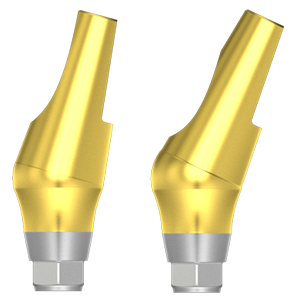
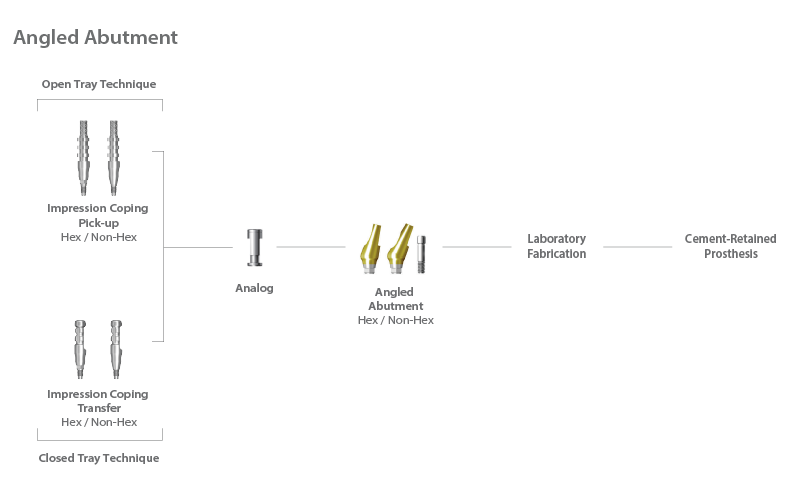
Angled Abutment
This ENGAGING or NON-ENGAGING angled abutment has a variety of diameters (Ø 4.5 mm, 5.5 mm) gingival heights (1.5 mm, 2.5 mm, 3.5 mm) and angulations (15°, 25°).
Read more
The 12 mm abutment height allows ample room for the technician to manually prepare and customize the shape and taper of the abutment based on the clinical situation. This abutment is ideal for cemented metal or PFM implant-supported crowns or FDPs.
Technical detail
 Cement-Retained
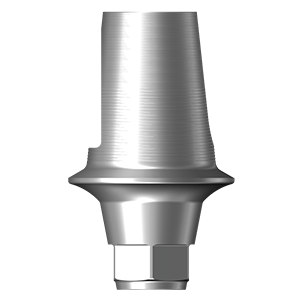
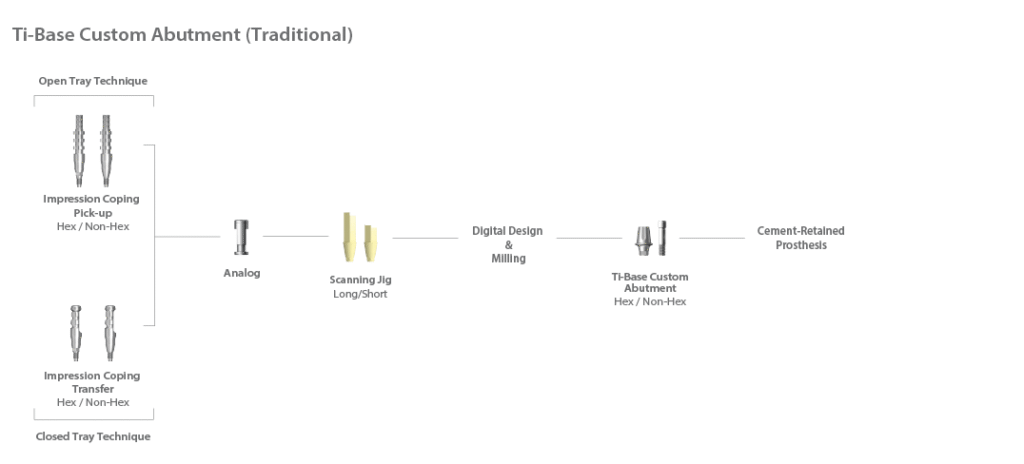
Ti-Base Abutment
This ENGAGING or NON-ENGAGING component has a variety of diameters (Ø 4.5 mm, 5.5 mm) and gingival heights (0.5 mm, 1.5 mm). Only one abutment height (tall 5.5 mm) is available.
Read more
This abutment is ideal for the digital workflow where a cemented CAD-CAM all-ceramic implant-supported crown or FDP will be delivered.
Technical detail
 Cement-Retained
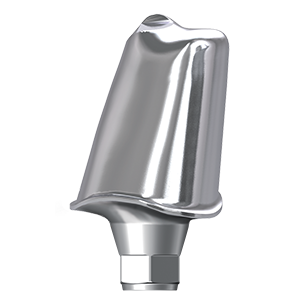
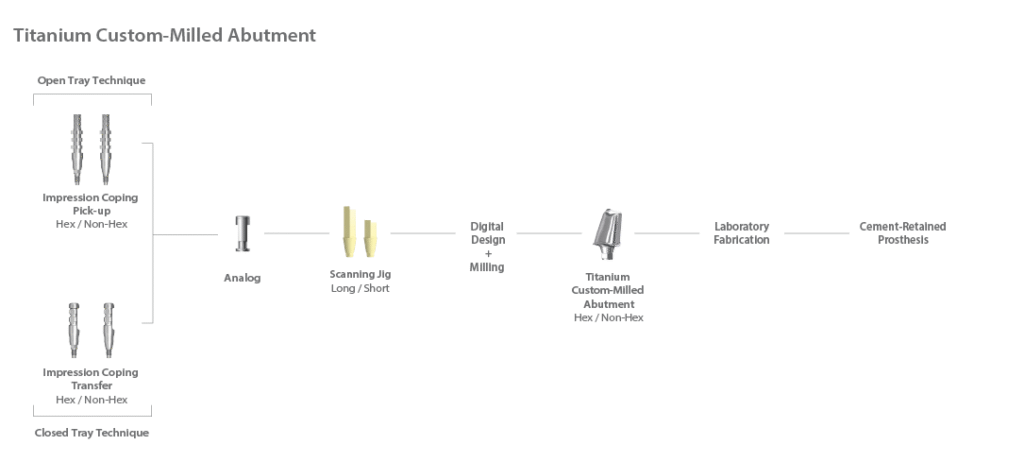
Titanium Blanks
This ENGAGING or NON-ENGAGING component has a variety of diameters (Ø 10.0 mm, 14.0 mm, 15.0 mm). The large abutment blank allows ample room for the technician to digitally design and mill a customized abutment.
Read more
The advantage of using an abutment blank is that the interface and abutment are fabricated as one piece. This abutment is ideal for the digital workflow where a customized abutment is required and a cemented CAD-CAM all-ceramic implant-supported crown or FDP will be delivered. Please note that currently only certified milling centers are able to mill the Dentium abutment blanks.
Technical detail
Cement-Retained Prosthesis
For restoring single unit crowns or small (2, 3, or 4 unit) FDPs to an intermediary stock abutment. For a two-piece cement-retained prosthesis (crown or FDP).
Read more
These modified stock abutments are part of a multi-component restorative kit that clinicians can order to simplify the restorative process. The modified abutments combine the convenience of having various emergence profiles of traditional multi-unit abutments but incorporate the ti-base cemented interface. The clinician only needs to choose the appropriate abutment and the matching restorative kit. The kit contains all the impression and model-based fabrication components needed for the restorative workflow. The clinician can insert and deliver the specialized stock abutment, torque it, and leave it in place for the duration of the entire restoration fabrication process and try-in. A protective comfort cap is supplied in the kit to be used to cover the abutment in between restorative visits.
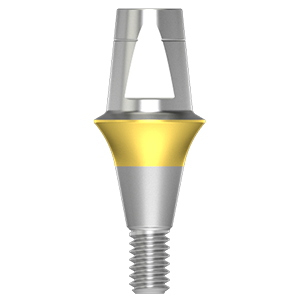 Cement-Retained
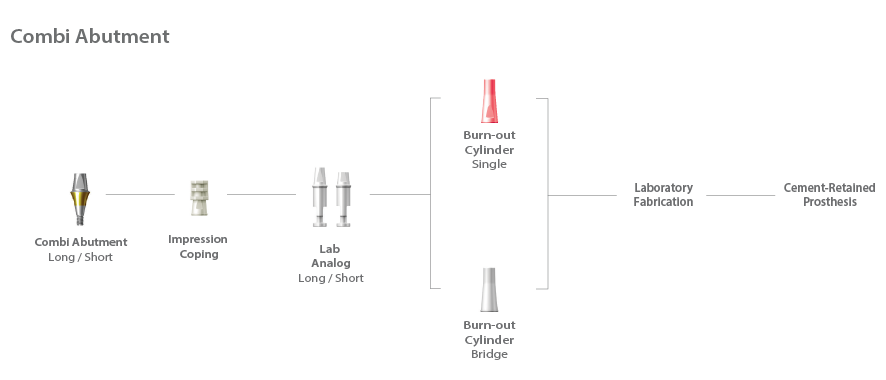
Combi Abutment
This NON-ENGAGING component has a variety of diameters (Ø 4.5 mm, 5.5 mm, 6.5 mm), gingival heights (1.0 mm, 1.5 mm, 2.5 mm, 3.5 mm, 4.5 mm, 5.5 mm), and abutment heights (short 4.0 mm, tall 5.5 mm).
Read more
This is a combined one-component screw and abutment – the screw is integrated into the abutment itself. This abutment can be delivered intra-orally, torqued into place, and remains in place for the remainder of the restorative process. An impression coping snaps over the abutment and is picked-up in a conventional impression. An abutment-analog is inserted into the impression before pouring. Engaging or non-engaging burn out cylinders are available for either crown or FDP workflows. The definitive restoration is then cemented intra-orally. These abutments are ideal for cemented porcelain-fused-to-metal or all-ceramic implant-supported crowns or FDPs.
Technical detail
 Cement-Retained
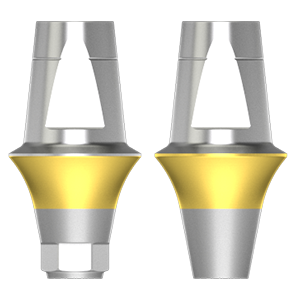
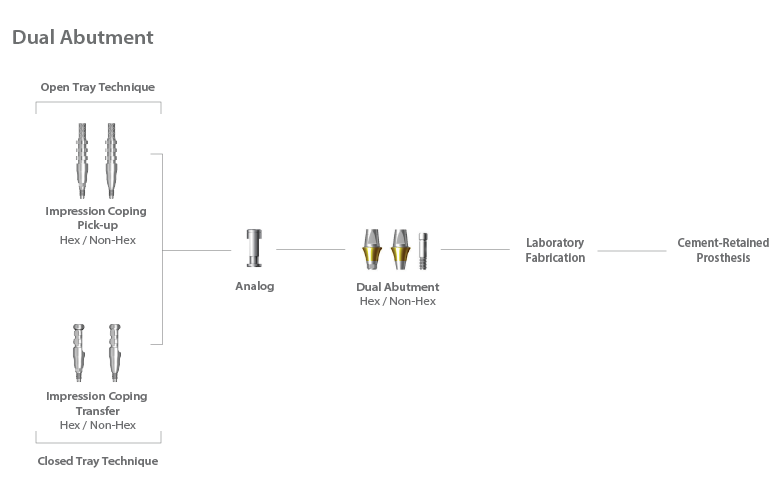
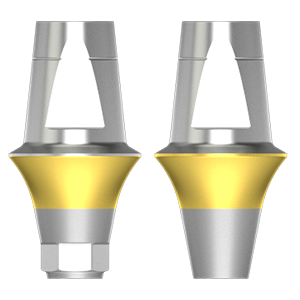
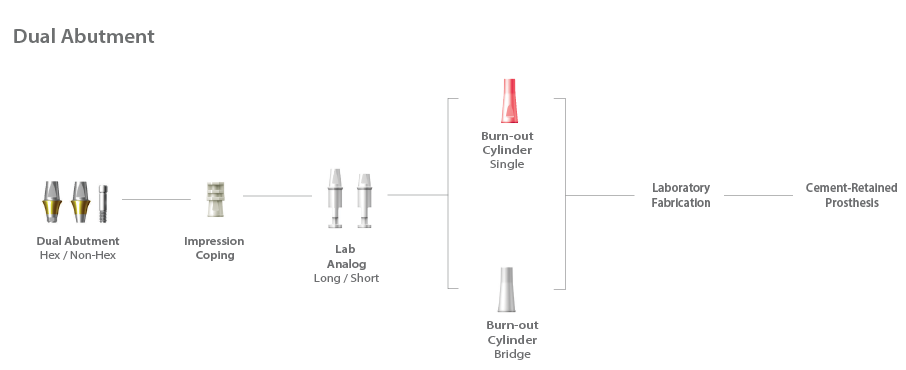
Dual Abutment
This ENGAGING or NON-ENGAGING component has a variety of diameters (Ø 4.5 mm, 5.5 mm, 6.5 mm) and gingival heights (1.0 mm, 1.5 mm, 2.5 mm, 3.5 mm, 4.5 mm, 5.5 mm).
Read more
Only one abutment height (tall 5.5 mm) is available. This is a two-component abutment where the screw and abutment are separate components. This abutment can be delivered intra-orally, torqued into place, and remains in place for the remainder of the restorative process. An impression coping snaps over the abutment and is picked-up in a conventional impression. An abutment-analog is inserted into the impression before pouring. Engaging or non-engaging burn out cylinders are available for either crown or FDP workflows. The definitive restoration is then cemented intra-orally. These abutments are ideal for cemented porcelain-fused-to-metal or all-ceramic implant-supported crowns or FDPs.
Technical detail
Large Bridge / Full-Arch
Screw-Retained Prosthesis
For restoring large (4+ unit) FDPs or full arch prosthetics to an intermediary stock multi-unit abutment. The multi-unit screw abutments (straight or angled) are screwed directly into the implant fixtures and form the foundation of these larger prosthetics.
Read more
The platform of the multi-unit abutments should ideally sit at least 0.5-1.0mm below the gingival level. The restorative components chosen depend on the type of super-structure restoration being fabricated (ie, traditional metal casted substructure, CAD-CAM monolithic ceramic, etc.). For a one-piece screw-retained prosthesis (FDP). The casted metal sub-structure/framework is screwed directly the multi-unit abutments. The tooth-colored super-structure can consist of porcelain layered directly onto the metal framework, or individual crowns cemented onto ‘thimble’ style preparations on the framework. These components are best utilized in conventional laboratory workflows (manual wax-up and casting) or hybrid laboratory workflows (digital framework design, mill framework in wax, then cast).
 Screw-Retained
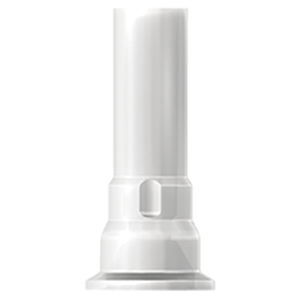
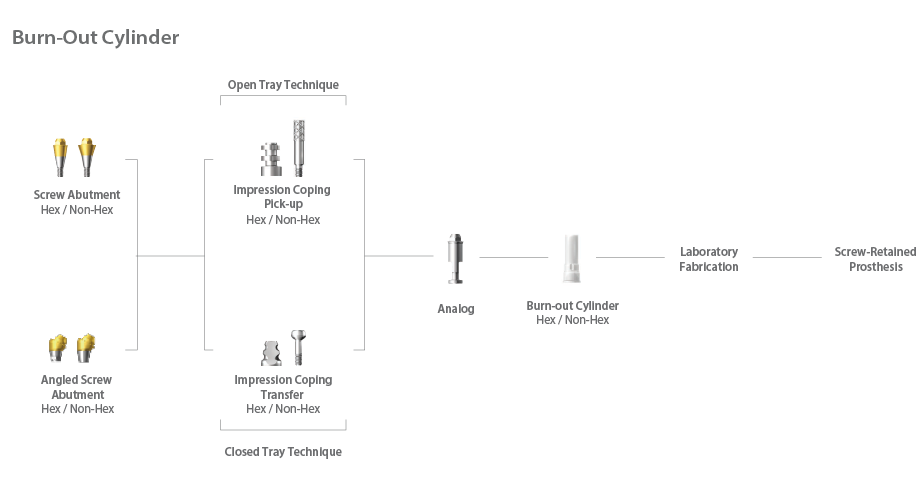
Burn-Out Cylinder
This ENGAGING or NON-ENGAGING component has a variety of diameters (Ø 4.5 mm, 5.5 mm). The 12 mm abutment height allows ample screw channel ‘chimney’ height in situations where there is excess prosthetic space, but allows the technician the ability to manually reduce the height prior to casting.
Read more
These abutments are ideal for traditional casted metal frameworks with any type of metal alloy for implant-supported restorations restored to the abutment-level. Please note that this type of component is the earliest version of a castable component. Lab technicians may find it easier to use either the castable gold cylinder or the metal cylinder for an improved implant abutment fit.
Technical detail
 Screw-Retained
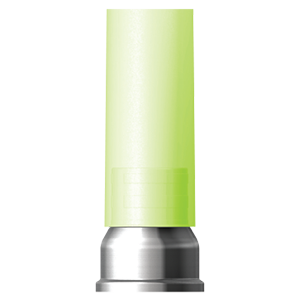
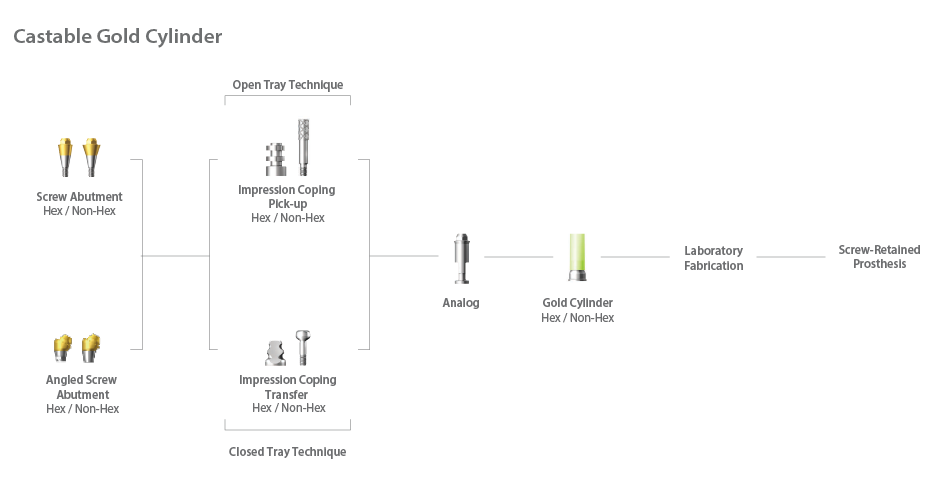
Castable Gold Cylinder
This ENGAGING or NON-ENGAGING component has a variety of diameters (Ø 4.5 mm, 5.5 mm). The 12 mm abutment height allows ample screw channel ‘chimney’ height in situations where there is excess prosthetic space, but allows the technician the ability to manually reduce the height prior to casting.
Read more
These abutments are ideal for traditional casted metal frameworks with high noble metal for implant-supported restorations restored to the abutment-level.Lab technicians may find the following casting information helpful during laboratory casting with gold cylinders:Melting temperature of the gold cylinder:• 2552° – 2714° Fahrenheit• 1400° – 1490° CelsiusThe gold cylinders are made of a 60% gold alloy. It is recommended to use a similar high gold content alloy when casting. A 52% Au alloy works sufficiently well in this case. Non-precious alloys (base metals) should not be used with gold cylinders.To avoid porcelain cracking, a minimum of 0.5mm of casting alloy should surround the gold cylinder keeping the porcelain off or away from the abutment alloy and extend 0.5 mm past the margin of the casting alloy.
Technical detail
 Screw-Retained
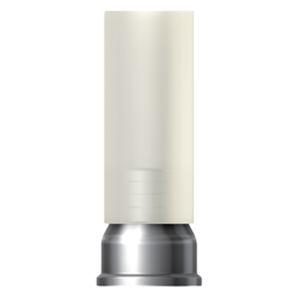
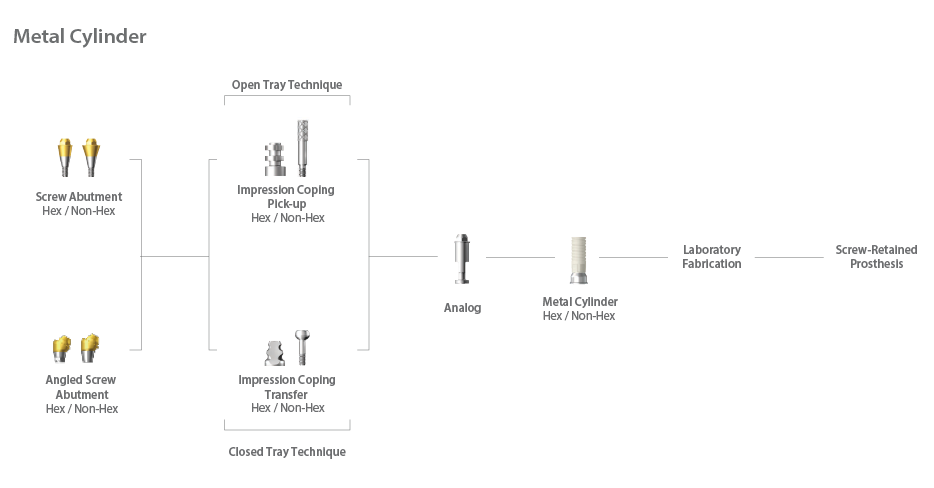
Metal Cylinder
This ENGAGING or NON-ENGAGING component has a variety of diameters (Ø 4.5 mm, 5.5 mm). The 12 mm abutment height allows ample screw channel ‘chimney’ height in situations where there is excess prosthetic space, but allows the technician the ability to manually reduce the height prior to casting.
Read more
These abutments are ideal for traditional casted metal frameworks with noble or base metal for implant-supported restorations restored to the abutment-level.
Technical detail
 Screw-Retained
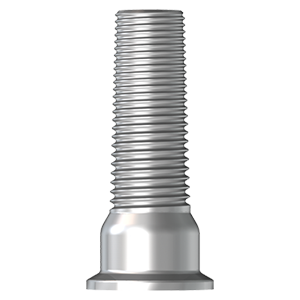
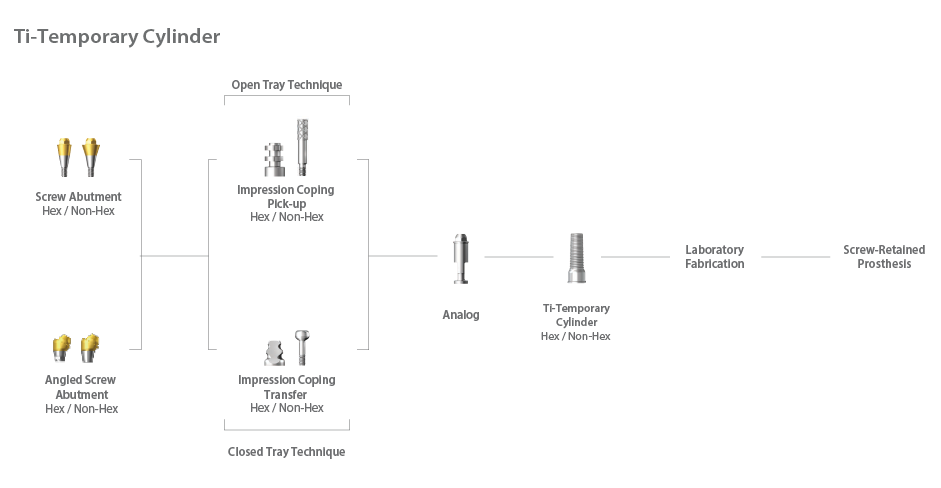
Ti-Temporary Cylinder
This ENGAGING or NON-ENGAGING component has a variety of diameters (Ø 4.5 mm, 5.5 mm) and gingival heights (1.0 mm, 2.0 mm, 3.0 mm). The 10 mm abutment height allows ample room for the technician to adjust the height of the abutment based on the clinical situation.
Read more
These components are ideal for interim acrylic or resin implant-supported restorations restored to the abutment-level.
Technical detail
Cement-Retained Interface
For restoring large (4+ unit) FDPs or full arch prosthetics to an intermediary stock multi-unit abutment. The multi-unit screw abutments (straight or angled) are screwed directly into the implant fixtures and form the foundation of these larger prosthetics.
Read more
The platform of the multi-unit abutments should ideally sit at least 0.5-1.0mm below the gingival level. The restorative components chosen depend on the type of super-structure restoration being fabricated (ie, traditional metal casted substructure, CAD-CAM monolithic ceramic, etc.). For a two-piece screw-retained prosthesis (FDP). The CAD-CAM milled all-ceramic framework is cemented to metal inserts which then sits onto the multi-unit abutments. These components are ideal for the fully digital workflow where a milled abutment interface is needed.
 Cement-Retained
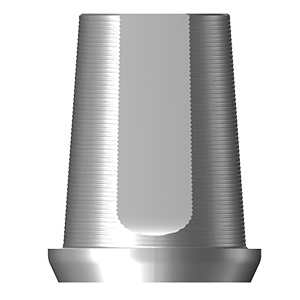
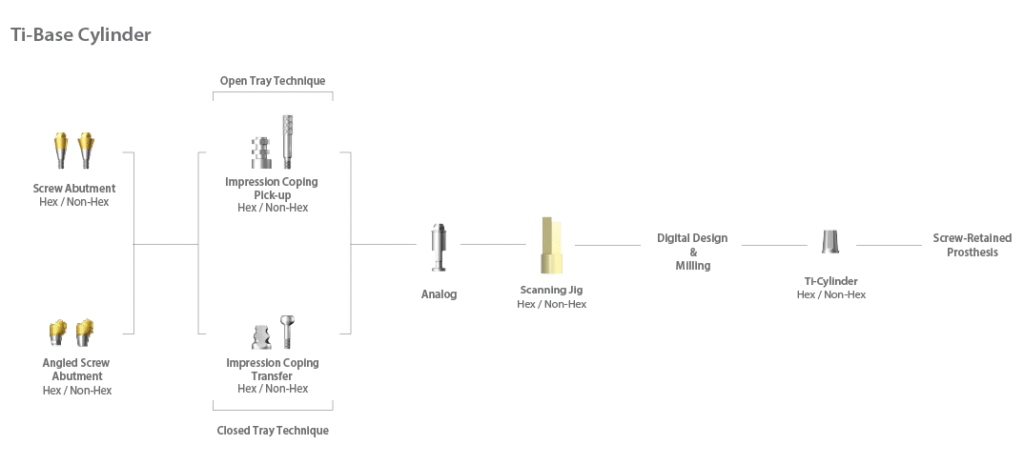
Ti-Base Cylinder
This ENGAGING or NON-ENGAGING component has a variety of diameters (Ø 4.5 mm, 5.5 mm). Only one abutment height (5.5 mm) and shoulder height (0.8 mm) are available.
Read more
These abutments are ideal for the fully digital workflow where a CAD-CAM all-ceramic implant-supported superstructure will be restored to the abutment-level. When these ti-base cylinder inserts are utilized and cemented into the superstructure, they ensure that the prosthetic screw clamps down onto a metal interface instead of ceramic.
Technical detail
Overdenture
Removable Retention
For attaching a removable denture onto implant(s). For securing a removable denture directly to implant fixtures or an implant-supported bar substructure. Clinicians can choose their preferred retention method of either ball or Locator attachments.
 Removable Retention
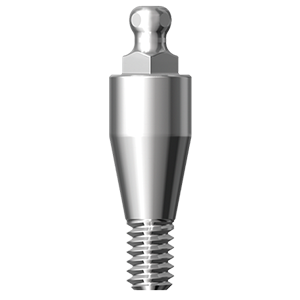
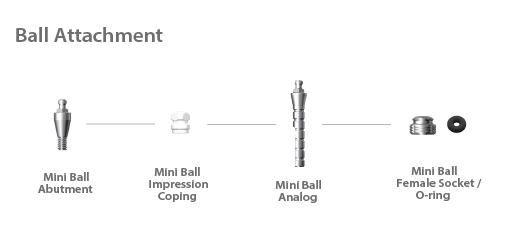
Ball Attachment
The ball attachment utilizes a spherical projection on the implant with a reduced neck diameter where a rubber O-ring engages. This type of attachment is the most forgiving offering freedom of movement of the prosthesis in all three axes (vertical, anterior-posterior, mesial-distal).
Read more
The clinician has the choice of various gingival heights of the abutments (0.0 mm, 1.0 mm, 2.0 mm, 3.0 mm, 4.0 mm, 5.0 mm).
Technical detail
 Removable Retention
Locator (Standard)
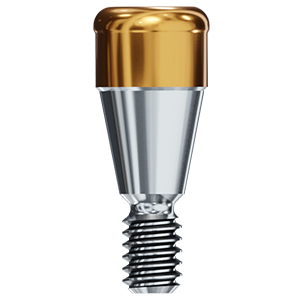
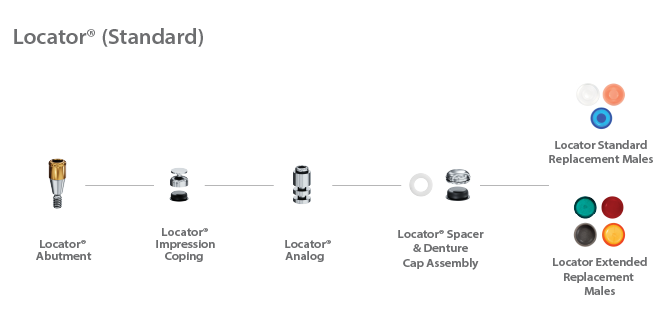
The standard Locator utilizes an abutment with a range of gingival heights (0.5 mm, 2.0 mm, 3.0 mm, 4.0 mm, 5.0 mm. The low profile attachment system involves a self-aligning retention insert with a dual retention feature and ability to pivot with movement of the prosthesis.
Read more
The Standard retention inserts are designed for 10° of divergence per implant (20° total) and the Extended Range retention inserts are designed for 20° of divergence per implant (40° total).
Technical detail
 Removable Retention
Locator (R-Tx)
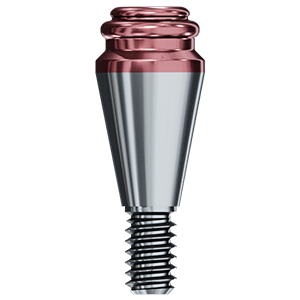
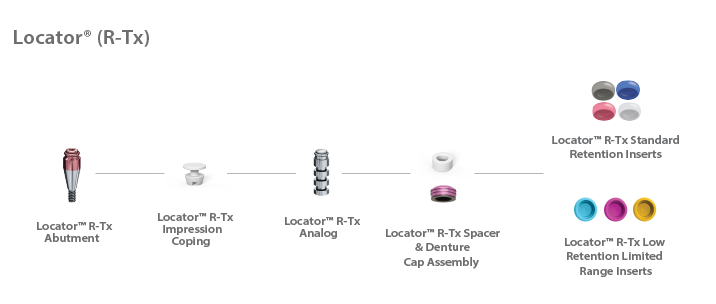
The new Locator R-Tx utilizes an abutment with a range of gingival heights (0.5 mm, 2.0 mm, 3.0 mm, 4.0 mm, 5.0 mm. The low profile attachment system involves a self-aligning retention insert with a dual retention feature and ability to pivot with movement of the prosthesis.
Read more
The R-Tx retention inserts are designed for 30° of divergence per implant (60° total).
Technical detail
Need help planning the restoration?
Send us your case details and we’ll recommend the right components.